
Reviewed · COOKING CLASSES
Traditional Cooking Class In Tamarindo
The most interesting part of this Tamarindo experience is the setting: you cook in a local home rather than a polished culinary studio. Chef Astanda and hosts including Susanna share family recipes, wood-fire methods, the use of a pilón, and the everyday food culture of Guanacaste. I like the small eight-person maximum and the chance to choose from several dishes. I also like that you finish by eating a fresh three-course meal together, not just watching a demonstration.
The main caution is timing and expectations. The advertised length is about 2 hours 45 minutes, yet some sessions have lasted four to four and a half hours, with much of the work devoted to chopping and preparation. If you want to cook a full dish yourself, ask ahead. This may be closer to a friendly cultural cooking evening than a formal skills class.
Key points to know before booking
- A local home kitchen: You enter a personal space in Tamarindo, with conversation, family cooking traditions, and a less polished setting than a cooking school.
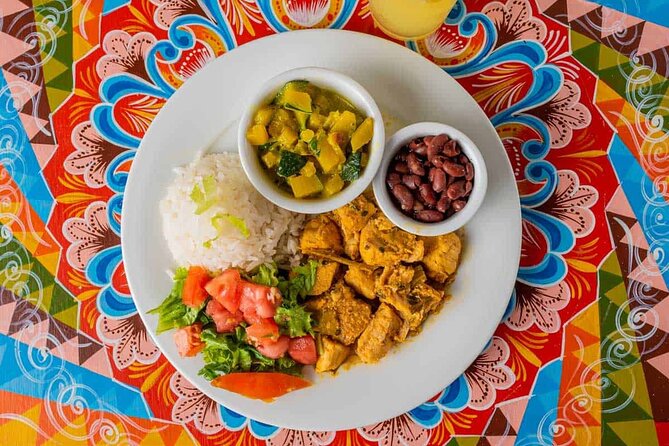
- Guanacaste dishes: Possible recipes include tortillas, chorreadas, patacones fritos, Olla de Carne, arroz de maíz, chicken and rice, and plantain ceviche.
- Maximum of eight people: The small group can make conversation easy, though a compact kitchen may feel crowded when everyone is preparing food.
- Hands-on preparation: Expect to chop vegetables and help assemble dishes, but the host or assistant may handle most stove work.
- Timing needs confirmation: The stated duration is 2 hours 45 minutes, while some sessions have run well over four hours.
- $99 per person: The price makes most sense if you value a private-home setting, a full meal, local stories, and cultural exchange more than formal culinary instruction.
A home kitchen rather than a cooking school
This experience begins at 855R+8V4 in Tamarindo, near the town center. The meeting point is easy enough in principle, but the home has little or no visible signage. I would not simply wander around looking for a cooking class. Confirm the directions before you set out, and consider arranging local transportation if you are staying outside the center.
Once you arrive, the evening takes place in the chef’s home. That matters. You are not stepping into a staged restaurant kitchen with numbered workstations and measured ingredients. You are seeing how a local cook organizes a meal in a familiar household setting, with the warmth and occasional inconvenience that come with it.
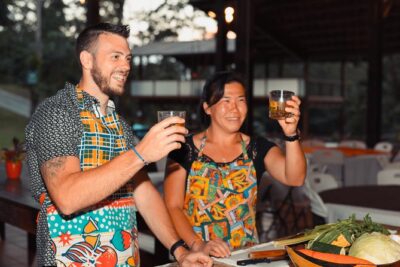
That informality is one of the experience’s strongest features. Hosts such as Astanda and Susanna are described as warm, funny, and eager to talk about Costa Rican food. Conversation may cover local life, family traditions, ingredients, and the stories behind recipes. Music, dancing, and singing have also been part of some evenings.
The tradeoff is comfort and structure. A home kitchen can feel personal and authentic, but it may have limited counter space, basic tools, and less room for eight people to work at once. If you prefer a tidy, highly organized class with a clear lesson plan, this may not be your ideal fit.
A few more things to book around Tamarindo
- Cooking and Salsa Dance Lesson Combo
★ 5.0 · 90 reviews - Sloth Tour in La Fortuna and Tortillas Cooking Class
★ 5.0 · 88 reviews - Cooking Class “Cook Like a Local” La Fortuna
★ 4.5 · 75 reviews
Choosing the menu from Guanacaste traditions
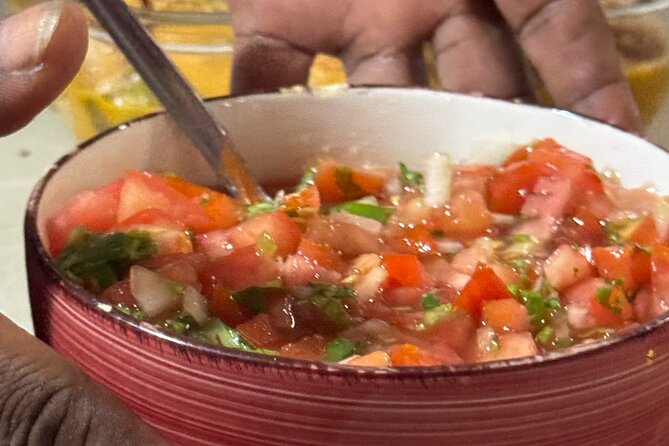
The menu is not limited to one fixed dish. You may choose what you want to learn from several options, or allow the chef to suggest a seasonal selection based on local market ingredients. That flexibility is useful if you already know what interests you, such as plantains, tortillas, rice dishes, or hearty soups.
The food list points to the breadth of Costa Rican home cooking. You might work with:
- Tortillas, made by hand
- Chorreadas, a corn-based Costa Rican specialty
- Patacones fritos, crisp fried green plantains
- Olla de Carne, a hearty beef and vegetable soup
- Arroz de maíz, a corn and rice preparation
- Arroz con pollo, a familiar chicken and rice dish
- Plantain or banana ceviche
- Seasonal vegetables, fruit, and other local ingredients
Some options may surprise you. Plantain ceviche uses lime juice rather than heat to change the texture of the ingredient. It offers a vegetarian alternative to fish ceviche and shows how local cooks use produce in ways you may not see on a standard restaurant menu.
Arroz con pollo is another useful dish to learn because it is widely recognized in Costa Rica and practical to recreate at home. Achiote gives it a warm orange color, while local seasoning and cooking habits shape the final flavor. These small details help connect the food to daily life rather than treating it as a list of exotic menu items.
You should ask exactly what will be prepared before booking. One family found that banana ceviche was included instead of fish ceviche and felt the description had not made that distinction clear enough. The seasonal approach can be a plus, but it also means you should not assume the menu will match photographs or a dish you have in mind.
What you actually do during the session
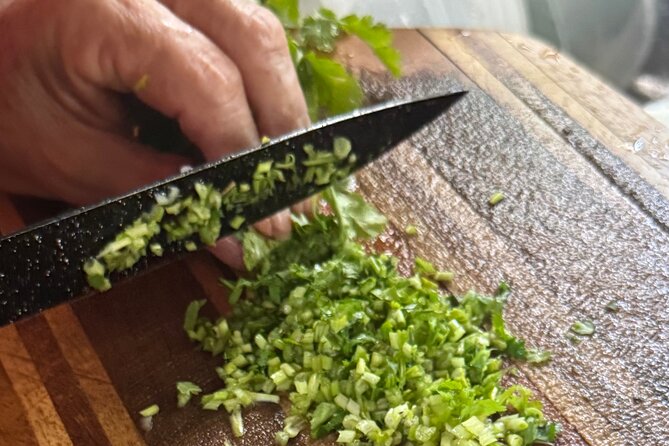
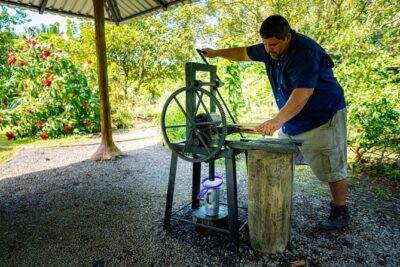
The advertised experience promises hands-on work. In practical terms, you are likely to wash, cut, season, prepare ingredients, and help assemble the meal. You may see the chef demonstrate techniques such as wood-fire cooking or the use of a pilón, a traditional mortar used to pound and combine ingredients.
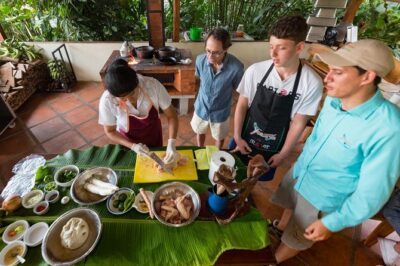
The important distinction is that hands-on does not always mean each person cooks a complete dish from beginning to end. Several sessions have involved a great deal of chopping, sometimes with vegetables cut into very small pieces. The chef and assistant have handled much of the stove work, partly for safety and partly because the kitchen is in a private home.
That format can work well if you enjoy being part of a shared meal. You get to see how ingredients are organized, ask questions while food is prepared, and contribute to a dinner that everyone eats together. It can feel like joining a family meal preparation rather than attending a technical course.
It is less satisfying if your main goal is to master knife skills, heat control, seasoning, or a complete recipe. The tools may be basic, and precise measuring is not always part of the process. Traditional home cooks often work by eye and instinct, so you may need to write down quantities yourself or ask for measurements during the session.
I recommend asking three direct questions before you reserve:
- Will I cook at least one dish on the stove?
- How much time will be spent chopping and preparing ingredients?
- Will I receive written recipes with measurements?
Those answers will tell you more about the fit than the general promise of a cooking class.
The food and the shared dinner
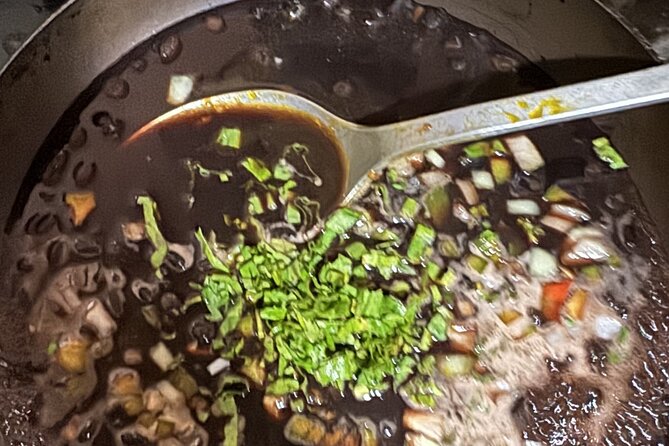
After the preparation, you sit down to eat the meal you helped make. The three-course format is a real part of the value, especially in Tamarindo, where a meal out can quickly become expensive. You are not paying only for instruction. You are also paying for ingredients, hosting, conversation, and a dinner in a local home.
The food has received strong praise overall, particularly the fresh ingredients, beans, chicken and rice, and dessert. Some diners considered it the best meal of their Costa Rica visit. Others found parts of the food bland or cold, so I would keep expectations sensible. Home cooking varies from evening to evening, and the meal depends on the menu, timing, and how much preparation has already been completed.
Arrive ready to eat, but do not arrive starved. This is one of the most useful practical tips. If the session runs to four hours, you may wait a long time before dinner. One family arrived at 5 p.m. and did not eat until around 9 p.m. That schedule can be hard on young children, teenagers, or anyone who does not do well with a late meal.
A light snack before arrival is wise. You can still enjoy the final meal without spending the entire preparation period thinking about food. If you are bringing children, ask whether snacks or a shorter format can be arranged. The experience has worked well for some families with children around 11 years old, but the long timing has made other families unhappy.
Same base, a different kind of day:
- Private Transfer Liberia Airport
★ 5.0 · 227 reviews - Night Turtle Nesting Tour from Tamarindo
★ 4.0 · 206 reviews - Turtle Nesting Tour
★ 4.5 · 132 reviews - La Leona Waterfall Guided Tour+Transportation
★ 5.0 · 124 reviews
Why the small group matters
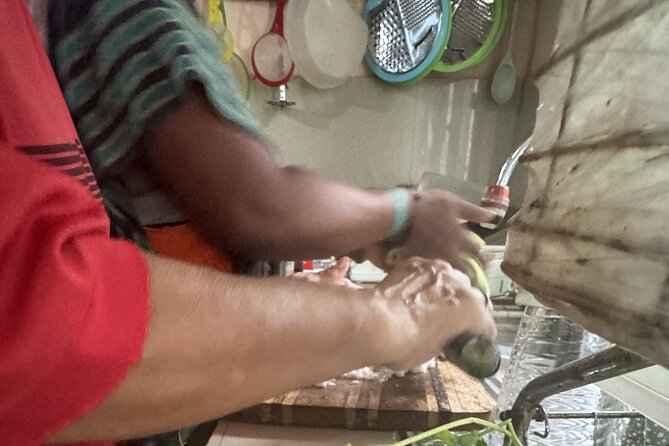
The stated maximum is eight participants. That is a sensible limit for a home kitchen, and a smaller group should give you more room to ask questions and more chances to help. Solo visitors and couples can also find it easy to meet people because everyone shares the same table and meal.
Still, eight people can feel like a crowd in a compact house. One session reportedly had ten people, which made the space and instruction feel strained. The provider has indicated that private options may be available, but you should confirm the current arrangement rather than assume you will have a private class.
The social side is part of the appeal. You may leave with new friends, a few recipes, and a better sense of how food connects with family life in Guanacaste. If you want a quiet, tightly focused lesson, the conversation may feel like a distraction. If you enjoy talking over food, it may be the best part of the evening.
Music adds to the mood, though it has sometimes been loud enough to make the chef difficult to hear. Speak up if that happens. The hosts have encouraged participants to request changes such as lower music, an extra towel, napkins, or more explanation. You should feel free to ask during the session rather than waiting until afterward.
Authentic details, with a few practical rough edges
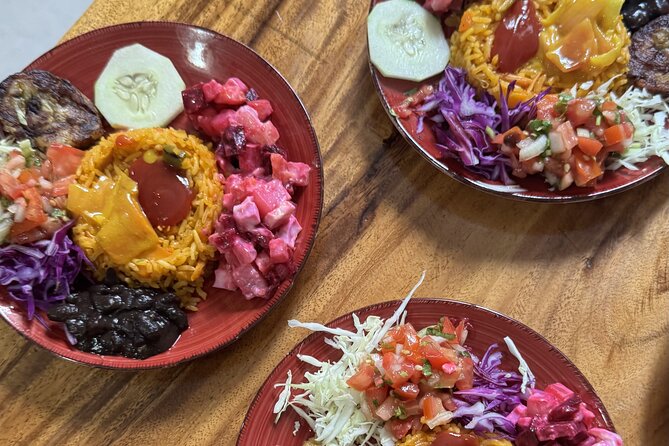
The experience offers details you may not find in a restaurant. You can hear why certain ingredients matter, see traditional tools in use, and learn how recipes move from family kitchens to the table. Wood-fire cooking and the pilón give the class a sense of place, while local market ingredients keep the menu connected to the area.
The home setting also means you should expect ordinary household limitations. There may be only a small hand towel, and napkins may not be placed out unless requested. Bring your own hand towel if that would make you more comfortable, and wash your hands carefully before handling food.
Basic or worn kitchen knives have been noted during some sessions. This is not the place to expect a professional knife-skills lesson. The host’s cooking knowledge and stories are the focus, not high-end equipment.
Water service has also been interrupted briefly during one session, though stored water allowed the cooking to continue. That kind of event is unusual but possible in a home setting. You are paying for access to local life, and local life is not always as controlled as a commercial kitchen.
Is $99 a fair price in Tamarindo?
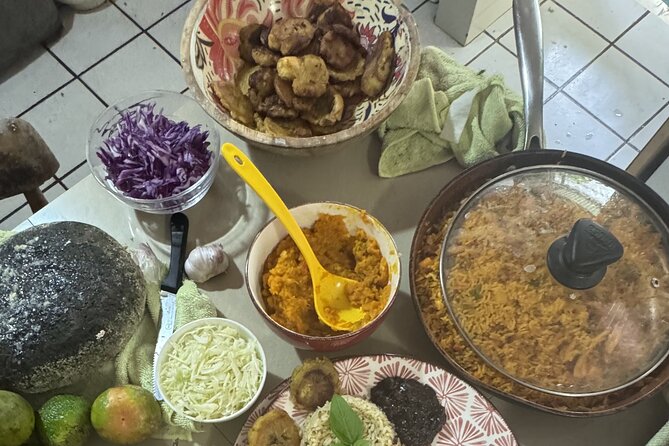
At $99 per person, this is not a bargain cooking demonstration. The price is reasonable only if you place real value on the complete package: a small group, a local home, ingredients, a three-course meal, personal stories, and a cultural exchange.
The value drops if you want formal instruction, precise recipes, a professional kitchen, or a short two-hour activity. A session that runs four hours can either feel generous or feel inefficient, depending on what you are getting from the time. If much of the evening is spent chopping while the host does the actual cooking, the $99 price will feel high.
I would compare it with the cost of a good Tamarindo dinner and ask what you want from the night. If you mainly want to eat Costa Rican food, a restaurant is simpler. If you want to understand how the food is prepared in a local home and enjoy a social evening, this experience offers something a restaurant cannot.
The booking pattern suggests planning ahead may be wise, since it is often reserved about 39 days before the date. Free cancellation is available until 24 hours before the start time. After that point, the amount paid is not refunded, and late changes are not accepted.
Who should book this Tamarindo cooking experience?
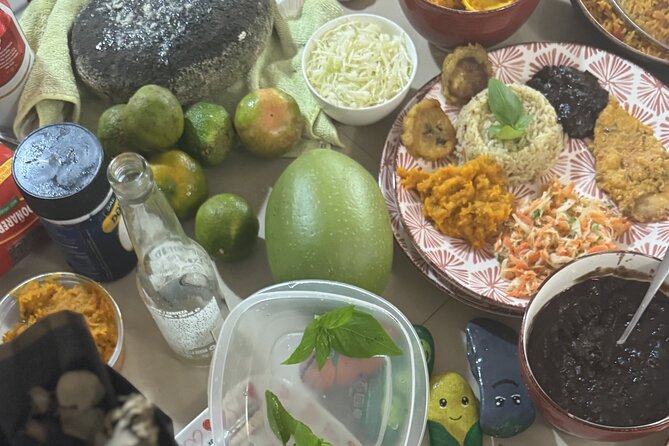
I would recommend it to curious food lovers who enjoy conversation, flexible plans, and a personal setting. It is also a good match for solo visitors and couples who want an evening activity that combines dinner with local contact.
Families should think carefully. Children who enjoy chopping, trying new foods, dancing, and sitting through a long meal may have fun. Young children or anyone who needs an early dinner may struggle if the class runs beyond the advertised time.
You should also book with the right definition of cooking class. Think of it as a participatory food and culture evening, with preparation and demonstrations, rather than a lesson where you independently produce a finished dish. If you want to cook more, ask the host before the day begins and state your goals clearly.
People with food allergies should communicate them ahead of time. The experience has accommodated allergy concerns, but the menu can change with the season, so early discussion is important.
Should you book it?
Book this experience if you want local hospitality, unusual Costa Rican dishes, and a shared meal in a home kitchen. The strongest reasons to go are the warm hosts, the chance to talk about Guanacaste cooking, the small group, and the final dinner made from regional ingredients.
Skip it if you need a firm 2-hour-45-minute schedule or expect to cook a complete recipe yourself. Before booking, confirm the menu, ask how long the session is currently running, and clarify how much stove work you will do. With those expectations set, the experience can be a memorable part of a Tamarindo stay. Without them, the long preparation time and $99 price may leave you feeling that the evening was more social than educational.
FAQ
Where does the cooking experience begin?
It begins at 855R+8V4 in Guanacaste Province, Tamarindo, Costa Rica. The activity ends back at the same meeting point.
How long does the experience last?
The stated duration is approximately 2 hours 45 minutes. Some sessions have lasted four to four and a half hours, so confirm the current timing before booking.
How many people can join?
The stated maximum is eight participants. A smaller group may provide more room and more chances to ask questions.
What dishes might I prepare?
Possible dishes include tortillas, chorreadas, patacones fritos, Olla de Carne, arroz de maíz, chicken and rice, and plantain or banana ceviche. The chef may suggest seasonal dishes using local market ingredients.
Do I cook a complete dish myself?
You will help prepare ingredients and may watch or take part in several stages. The host or assistant may handle most stove cooking, so ask ahead if cooking a full dish is important to you.
Is the meal included?
Yes. You prepare and eat a freshly made three-course meal together at the end of the experience.
Is the meeting point easy to find?
It is near the center of Tamarindo and close to public transportation, but the home may have no clear signage. Contact the provider for detailed directions, and consider arranging local transportation.
Can I cancel for a full refund?
You can cancel at least 24 hours before the local start time for a full refund. Cancellations or changes made less than 24 hours before the experience are not refunded or accepted.
Just added around Tamarindo
- Vandara Hot Springs & Horses+ Zipline+ sugarmill+ waterslide★ 5.0 · 12 reviews
- 2-Hour Private or Group Surf Lesson in Tamarindo!★ 4.5 · 46 reviews
- Surfing Lesson in Tamarindo★ 5.0 · 39 reviews
- Rio Celeste, Tenorio Hike, Sloths Sanctuary & Meal★ 4.5 · 48 reviews
- Sloths in their natural habitat & Blue river waterfall★ 5.0 · 32 reviews
- Miravalles Volcano: Sloth’s Park, Hanging Bridges & Hot Springs.★ 5.0 · 7 reviews
- Private Transfer Tamarindo Beach to/from Liberia Airport★ 5.0 · 51 reviews
- ATV and Zipline Combo Tour from Tamarindo or Conchal or Riu Hotel★ 5.0 · 47 reviews
Cooking Classes, compared.
Sloth Tour in La Fortuna and Tortillas Cooking Class
Read our review →
Pura Vida Cooking Class in La Fortuna (From farm to table)
Read our review →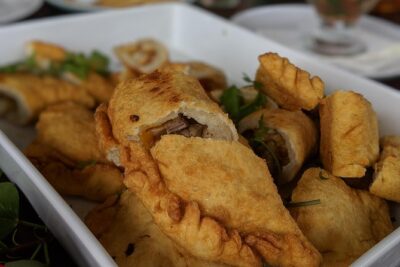

Private cooking class in organic farm at La Fortuna
Read our review →Browse the lists this tour appears in