
Reviewed · FARMS
Costa Rica Descents Organic Farm
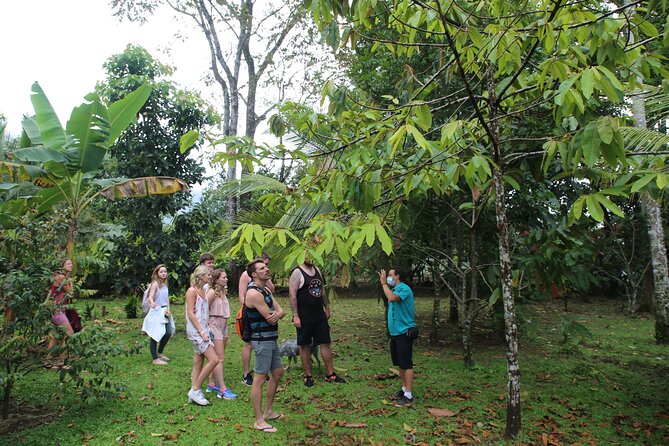
The most interesting part of this La Fortuna outing is its focus on how food is grown and used, not just how it looks on a plate. At Costa Rica Descents Organic Farm, you learn which crops grow during different seasons, how local produce reaches people, and why plants have long mattered in traditional medicine.
I like the small maximum of 15 people, since it gives your guide room to answer questions. I also like the practical lunch, coffee, or tea, which turns a short farm visit into a taste of daily Costa Rican food. The main drawback is the one-hour length. You get a useful introduction, but not a long farm stay or an extensive cooking lesson every time.
Key points to know before booking
- Seasonal farming is the main lesson: You learn what grows when and how local food is distributed.
- Medicinal plants add depth: The guide explains traditional plant-based medicine and the natural compounds plants produce for protection.
- A Costa Rican lunch is included: Coffee or tea comes with the meal.
- The group is capped at 15: This is a more personal setup than a large farm visit.
- The tour starts at 10:00 a.m.: It begins and ends at Costa Rica Descents Adventure Company.
- Guides bring plenty of personality: Chamo, Andres, Manuel, Cris, Pablo, and Werner are among the guides named in the provided feedback.
Why this farm visit adds something different to La Fortuna
La Fortuna is best known for Arenal Volcano, hot springs, waterfalls, rafting, and forest walks. Those are good reasons to come, but they can make the region feel like one long parade of outdoor thrills. This farm visit slows the pace and shows you a quieter side of Costa Rica: how local food is produced, prepared, and shared.
That change of pace matters. You are not simply looking at tropical plants and taking pictures. You are learning why a crop appears at one time of year and not another, and how a farm fits into the local food system. The emphasis on seasonality gives the visit a clear purpose.
I especially like that the experience connects farming with eating. The included lunch is not an afterthought. It gives you a chance to relate the discussion about crops to food on your own plate. Coffee or tea keeps the meal rooted in familiar Costa Rican hospitality without turning the activity into a formal restaurant stop.
The setting also suits families and mixed-age groups. The experience is listed as open to all ages, and the maximum group size is 15. That makes it easier for children, teenagers, and adults to follow the guide at their own pace.
A few more things to book around La Fortuna
- Pura Vida Cooking Class in La Fortuna (From farm to table)
★ 5.0 · 65 reviews - Private cooking class in organic farm at La Fortuna
★ 5.0 · 42 reviews - Chocolate and Farm Tour with local Tico family
★ 5.0 · 35 reviews
Entering Costa Rica Descents Organic Farm
You meet at Costa Rica Descents Adventure Company on Via 702 in La Fortuna at 10:00 a.m. The activity ends back at the same meeting point, which keeps the logistics simple. You do not need to arrange a separate finish location or work out how to return after lunch.
The visit lasts about one hour. That is enough time for a focused introduction, but you should set your expectations correctly. This is not a full-day farm program. It is a compact lesson with food included, making it easier to fit around another La Fortuna activity.
A short tour can be a good choice on a busy holiday. You might schedule it before an afternoon adventure, or use it as a lighter activity after a morning spent outdoors. Since the start time is fixed at 10:00 a.m., plan around that rather than treating it as a flexible drop-in visit.
The group can include up to 15 people. That is large enough to create a social atmosphere, but small enough for a guide to keep the explanation personal. If you enjoy asking questions, this format should work better than a crowded bus tour.
Learning what grows in each season
The first major subject is local food production and distribution. Your guide explains the relationship between crops and the seasons, including what grows when and how the farm distributes its produce.
This is useful because it moves beyond the simple idea that tropical countries grow everything all the time. Crops still respond to weather, timing, soil, and growing conditions. Seasonality affects what farmers can offer and how local food moves from the field to the people who eat it.
You may find this part especially rewarding if you cook at home or care about food sourcing. A farm visit can make the phrase local produce more concrete. Instead of treating food as something that appears on a market stall or restaurant menu, you see the work and timing behind it.
The distribution lesson also gives the farm a wider role. You are not only looking at plants in isolation. You are considering how food production connects with the surrounding community. That is a small but valuable shift in perspective.
Do not expect a long technical farming seminar. The experience is only about an hour, so the guide has to keep the subject moving. You will get an accessible overview rather than a detailed course in agriculture.
Medicinal plants and traditional knowledge
The farm visit also covers medicinal plants and traditional medicine practices that reach back to prehistoric times. The guide explains that plants produce hundreds of chemical compounds, often for their own protection against insects, fungi, disease, and animals that feed on them.
This scientific point gives the plant discussion substance. You are not simply being handed a list of folk remedies. You are learning why plants contain active compounds in the first place, and how those compounds relate to the plants’ own survival.
The subject is a good fit for anyone curious about the connection between nature and human health. It also adds a cultural layer to the farm. Plants can be food, medicine, and part of long-standing local knowledge at the same time.
Still, keep the boundaries clear. The activity explains traditional medicine practices. It is not described as a medical consultation, treatment session, or controlled demonstration of remedies. You should listen with interest, but not treat the guide’s presentation as personal medical advice.
This portion may be particularly engaging for older children and teenagers. It gives them a concrete reason to pay attention to plant defenses and natural chemistry, rather than seeing the farm as only a place to walk around.
Same base, a different kind of day:
- Skip-the-Line La Fortuna Waterfall Admission Ticket
★ 4.5 · 609 reviews - Hanging Bridges Walk in Arenal Volcano
★ 4.5 · 381 reviews - Baldi Hot Springs Day Pass in La Fortuna: 25 Thermal Pools
★ 4.0 · 137 reviews - La Fortuna: Mineral Hot Springs Full Day Ticket
★ 4.0 · 135 reviews
A Costa Rican lunch, coffee, and tea
Lunch is included in the price, along with coffee or tea. That makes the tour feel more complete than a brief walk with no food component.
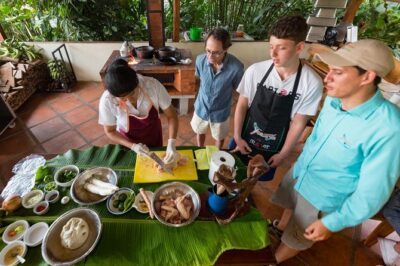
The meal also helps you understand the farm through taste. The food is presented as Costa Rican cuisine, and the available feedback names dishes such as chicken empanadas, mixed rice, and patacones during a cooking-focused visit. Because the published tour details promise lunch but do not set out a fixed menu, you should not assume those exact dishes will be served on every departure.
The food portion may include more interaction when the session is led by a guide such as Manuel, who is described as the cook in one account. His style is presented as funny and informative, with music and a friendly atmosphere also mentioned. That suggests the meal can be lively, but the exact format may depend on the day and guide.
I would book this for someone who enjoys tasting local food but does not need a long gourmet experience. The value comes from the connection between the farm lesson and the meal, not from a large menu or extended cooking course.
If you are booking mainly for a hands-on cooking class, check the current format before paying. The information confirms lunch, while the detailed cooking activities appear in some of the supplied experiences rather than in the core description. That distinction matters.
The guide can shape the experience
A farm visit depends heavily on the person leading it. The guide must explain plants clearly, keep the group moving, and make a short activity feel worthwhile.
Several guides are named in the supplied material. Chamo is described as fun, while Andres is connected with an educational and delicious visit. Manuel is associated with cooking, farm animals, and keeping the group engaged. Cris is praised for humor, confidence, and a strong sense of safety. Werner is described as giving clear directions and steady support.
Pablo is also named in connection with a combined rafting and organic farm experience. His comments focus more on adventure and safety, so you should not assume he will lead every farm departure. The same applies to the other named guides. They are useful names to know, but guide assignment is not guaranteed.
What you can reasonably expect is a guide-led activity rather than a self-guided walk. That matters at a farm because the plants may not explain themselves. A good guide provides the local context, points out the useful details, and makes space for questions.
The humorous tone mentioned by several people may appeal to families and groups of friends. If you prefer a quiet botanical lecture, the social energy could feel more informal than expected. For most visitors, that is likely a fair trade for a short experience.
Is the $58.67 price fair?
At $58.67 per person, the cost is not bargain-basement, especially for an activity lasting about one hour. The price makes more sense when you count the nature guide, lunch, coffee or tea, local taxes, and the small-group format.
You are paying for more than access to farmland. You get interpretation, a meal, and a planned meeting point in La Fortuna. If you would otherwise pay separately for lunch and a short cultural activity, the package becomes easier to justify.
The value depends on what you want from your morning. If your priority is a long farm tour, extensive animal encounters, or a full cooking class, this may feel too brief. If you want a compact local-food experience that fits beside larger adventures, the price is more reasonable.
I would see it as a short cultural food experience, not as a major full-day attraction. That is the right standard for judging it. The strongest value comes from combining farming, medicinal plants, and lunch in a tidy one-hour visit.
The fact that the activity is often reserved well ahead of time also suggests you should not leave it until the last minute if your schedule is fixed. Bookings average about 36 days in advance, though that does not guarantee every date will sell out.
Who should book this farm experience?
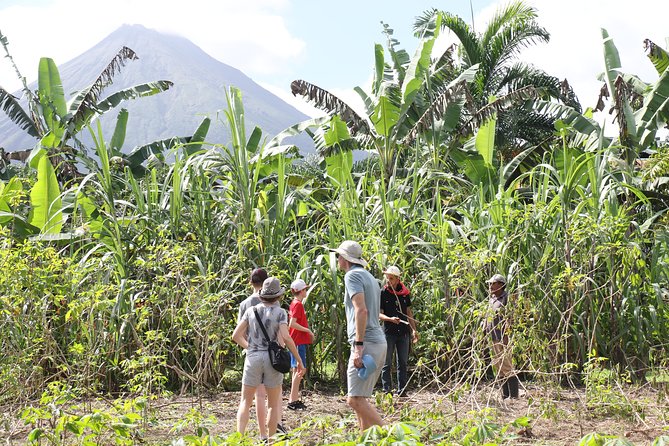
This tour fits families with children or teenagers, couples who want a break from adventure sports, and anyone interested in food production. It also suits visitors who want something local and educational without committing half a day.
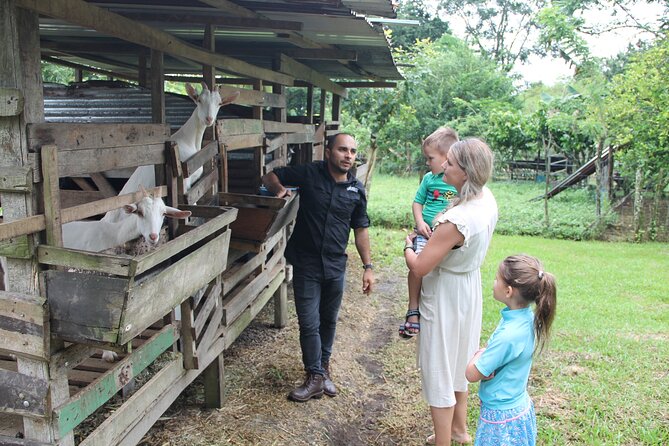
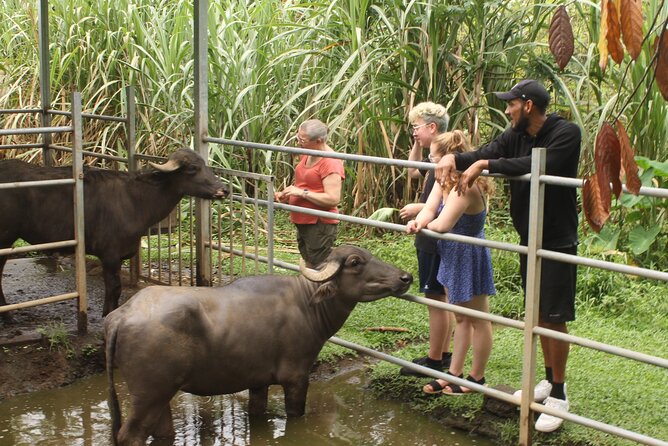
The family angle is strong. The farm includes food, plants, and, in some experiences, animals such as baby goats. Those animal encounters are not listed as a guaranteed part of every departure, so treat them as a possible feature rather than the main reason to book.
You may also like it if you are already planning a rafting or adventure outing with Costa Rica Descents. The farm visit can add a gentler activity to a trip built around speed and adrenaline.
It is less suitable if you want solitude, a long nature walk, or a detailed agricultural workshop. The group may reach 15 people, and the one-hour schedule leaves little room for extended exploration.
Service animals are allowed, and most people can participate. The activity is stated to have no minimum age requirement, but the available information does not describe the terrain or physical demands in detail. If anyone in your party has specific mobility needs, ask the provider before booking.
Practical details for planning your morning
Your start time is 10:00 a.m. at Costa Rica Descents Adventure Company, Via 702, Provincia de Alajuela, La Fortuna, 21007, Costa Rica. The tour returns to that same meeting point.
Confirmation is provided when you book. Local taxes, a nature guide, lunch, and coffee or tea are included. The maximum group size is 15 people.
Free cancellation is available if you cancel at least 24 hours before the start time. Changes or cancellations made less than 24 hours before the local start time are not accepted for a refund.
You might want to leave room in your schedule after the official end, since the published duration is approximate. The listed activity itself is about one hour, but meals and group pacing can affect the exact finish.
Should you book Costa Rica Descents Organic Farm?
Book it if you want a short, friendly look at Costa Rican food production with a meal built in. The seasonal farming lesson and medicinal plant discussion give the experience more substance than a quick photo stop, while the 15-person limit keeps it personal.
I would especially recommend it for families, food-minded visitors, and anyone balancing high-energy La Fortuna activities with something calmer. The named guides, including Manuel, Chamo, Andres, Cris, and Werner, are associated with humor, clear explanations, cooking, and good group support.
Skip it if you are seeking a long farm immersion, a guaranteed cooking class, or a full menu of activities. At one hour, this is an introduction. Its appeal lies in the combination of local food, traditional plant knowledge, and a convenient Costa Rican lunch.
FAQ
How long does the Costa Rica Descents Organic Farm tour last?
The activity lasts approximately one hour.
What time does the tour start?
The tour starts at 10:00 a.m.
Where does the activity meet?
You meet at Costa Rica Descents Adventure Company, Via 702, Provincia de Alajuela, La Fortuna, 21007, Costa Rica.
Where does the tour end?
The activity ends back at the meeting point.
What is included in the price?
The price includes local taxes, a nature guide, lunch, and coffee or tea.
How much does the experience cost?
The listed price is $58.67 per person.
How many people can join the tour?
The activity has a maximum of 15 participants.
Is the tour suitable for all ages?
Yes. The experience has no minimum age requirement, and most people can participate.
Can I cancel for a refund?
Yes. You can receive a full refund if you cancel at least 24 hours before the scheduled start time. Cancellations or changes made less than 24 hours before the start time are not accepted for a refund.
Just added around La Fortuna
- White Water Tubin in the river BALSA★ 5.0 · 40 reviews
- Adrenaline Pack (Zipline + Rafting)★ 5.0 · 40 reviews
- Arenal Volcano Combination Tour: Zipline, Tubing and Hot Springs★ 5.0 · 48 reviews
- Arenal Volcano Guided Hiking Tour – Lava Trails & Rainforest★ 4.5 · 35 reviews
- Transportation from La Fortuna to Tamarindo Beach★ 5.0 · 36 reviews
- Ceviche & Empanadas Cooking Class★ 5.0 · 50 reviews
- La Fortuna white water rafting + Authentic Costa Rican Lunch★ 5.0 · 54 reviews
- Sloth Tour★ 5.0 · 63 reviews
Farms, compared.
Pura Vida Cooking Class in La Fortuna (From farm to table)
Read our review →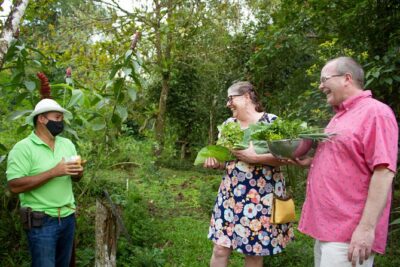
Private cooking class in organic farm at La Fortuna
Read our review →
Browse the lists this tour appears in