
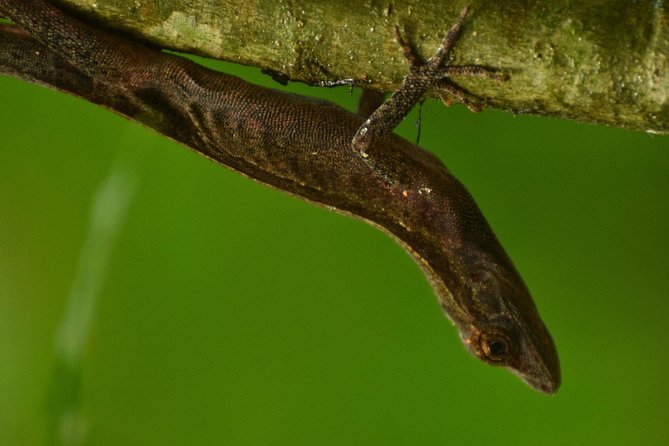
Reviewed · WILDLIFE
Monteverde Wildlife Walk & Hummingbird Encounter
The best part of this Monteverde outing is the way it connects wildlife spotting with the story of the forest. You may search for a quetzal one moment, then stop to examine a medicinal plant, hear about the Quaker community, or watch a bat tucked into the trees. I especially like the telescope, which helps you see birds and creatures high in the canopy, and the personal touch of a small traditional Costa Rican snack made by the guide’s mother.
I also like the final stop at the Hummingbird Sanctuary, where dozens of hummingbirds fly close to the feeders. The main thing to consider is that this is a forest walk, not a flat garden stroll. You need moderate fitness, proper shoes, and rain protection, while the reserve entrance fee and private transportation cost extra.
Key points at a glance
- Quetzal searches are a real possibility: Guides George, Vinny, and Roy have helped visitors spot quetzals, even in fog and rain.
- The telescope matters: It gives you a better chance of seeing birds and mammals high in the forest canopy.
- The group is limited to 10 people: This allows more room for questions and shared use of the viewing equipment.
- The walk lasts about 2 to 2.5 hours: Expect forest trails, changing weather, and a moderate physical effort.
- Hummingbirds finish the outing: The sanctuary gives you close views and good chances for photographs.
- Bring the right gear: A raincoat and walking boots are not optional extras in Monteverde’s cloud forest.
Why this Monteverde walk feels different
Monteverde is not a place where wildlife simply performs on schedule. The forest is often misty, wet, and full of movement that you may miss without help. A good guide changes the experience from a walk among trees into a careful search for life in the canopy, undergrowth, and forest floor.
This tour is built around that search. Before setting off, you help decide which trails make the most sense for the day. Recent wildlife activity and the group’s interests help shape the route, so the walk is not locked into one rigid path.
That flexibility is useful in Monteverde. If bird activity is strong in one area, the guide can give it more attention. If your group is especially interested in plants, mammals, or medicinal species, the walk can lean in that direction. You should still keep expectations realistic. Wildlife is wild, and a sighting is never guaranteed, even when conditions look promising.
The provider is George of the Cloud Forest. George is the guide most often associated with this experience, and Vinny and Roy have also led walks. The strongest praise centers on their ability to explain birds, plants, animals, local stories, and conservation without turning the walk into a dry lecture.
A few more things to book around Puntarenas
- Skip the Line:Day Ticket-La Paz Waterfall Gardens Nature Park & Wildlife Refuge
★ 4.5 · 226 reviews - Rio Celeste Waterfall Plus Sloths and wildlife Sanctuary
★ 5.0 · 110 reviews - Wildlife Safari Float by Kayak in Peñas Blancas River from Arenal
★ 5.0 · 79 reviews
Starting at the Monteverde Reserve entrance
The meeting point is at the entrance to the Monteverde Reserve, at 8633+2PM, Carr. a Reserva de Monteverde, Provincia de Puntarenas, Monteverde. The experience begins and ends at this meeting point.
The listed start windows are 7:30 to 10:00 in the morning and 1:00 to 4:00 in the afternoon, Monday through Saturday. The exact start time matters. Morning and afternoon forest conditions can feel very different, and wildlife activity may change with the weather and time of day.
You receive confirmation when booking. The meeting point is near public transportation, but private transportation is not included. The description also refers to hassle-free hotel transfer, so I would confirm the pickup arrangement before paying if you are staying away from the reserve entrance. The clearest practical assumption is that you should plan to reach the meeting point yourself unless a transfer has been specifically arranged.
The reserve entrance fee is also separate. That can affect the true cost of the outing. At $45 per person, the tour is reasonably priced for a guided forest walk with a telescope, insurance, a certified local guide, a snack, and the hummingbird visit, but you should add the reserve admission and any transportation when comparing it with other Monteverde options.
Choosing the trail for the day
The group gathers before the walk to discuss the best trail for current conditions and interests. This short planning stage is more important than it may sound. Cloud forest activity changes with rain, fog, wind, and recent sightings, so a guide who can adjust the route has an advantage over a fixed script.
The group size is limited to 10 people. That is not the same as having the forest to yourself, but it is small enough for the guide to hear questions and point out details without shouting across a crowd. The experience is also described as private, while the additional information gives a maximum of 10 people. If privacy is important to you, confirm whether your booking is fully private or simply limited to a small group.
The walking pace should allow time to stop and look. The guide may use the telescope to scan branches and distant sections of forest, then explain what you are seeing. You may spend several minutes waiting for a bird to settle into view, which is part of the pleasure, but not ideal if you prefer constant motion.
Looking for birds, mammals, and forest plants
The walk covers Monteverde’s cloud forest ecosystem, including its canopy and understorey. You will learn about birds and mammals, along with orchids, mosses, ferns, and lichens. The forest’s moisture gives these plants a particularly important role, and the guide explains how the different layers of the ecosystem fit together.
The telescope is one of the most useful inclusions. A bird high in a tree can be little more than a flicker of movement to the naked eye. With the telescope, you have a better chance to study colors, shape, and behavior. It can also help with photography, though the quality of your picture will depend on your camera, the light, and how steady you can hold it.
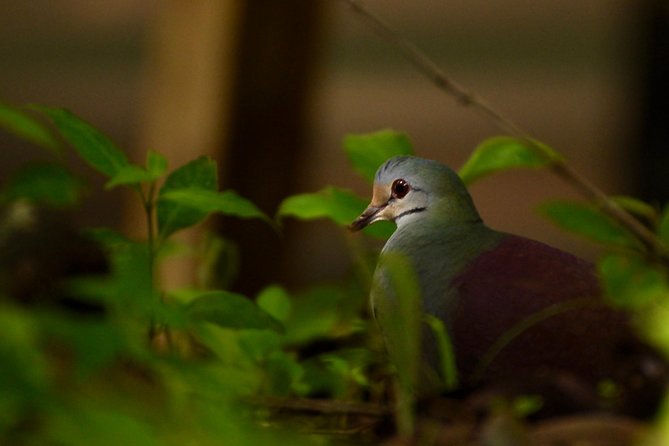
Quetzals are a major draw. Several accounts of the experience describe successful quetzal sightings, including one search made specifically by a bird enthusiast. You may also encounter other birds, howler monkeys, coatis, or a bat. These sightings are never promised, but the guide’s local experience improves your odds of noticing what is already around you.
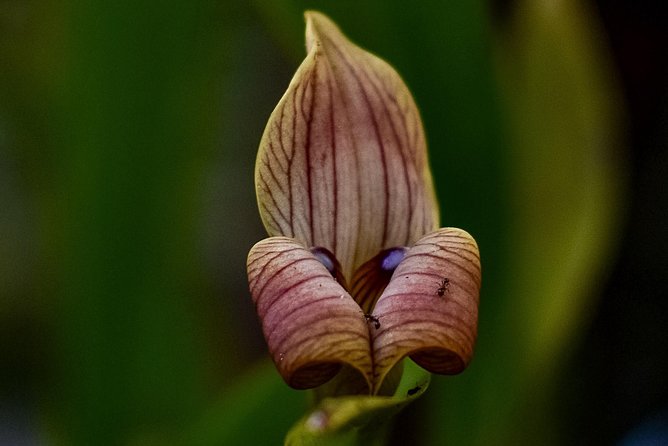
A useful part of the walk is learning to look beyond large animals. Tiny lichens, mosses, ferns, and orchids help define the cloud forest, even when no major bird appears. If the weather is foggy or rainy, the plant life may become the star of the walk.
Same base, a different kind of day:
- Puntarenas Shore Excursion: Rainforest Skywalk & Tarcoles River
★ 4.5 · 120 reviews - 10 in 1 Puntarenas Highlights tour
★ 4.5 · 119 reviews - EXCLUSIVE Night Tour with Night Vision- small groups 8 people max
★ 5.0 · 98 reviews - Puntarenas sightseeing tour
★ 4.5 · 92 reviews
Plants, medicine, and conservation
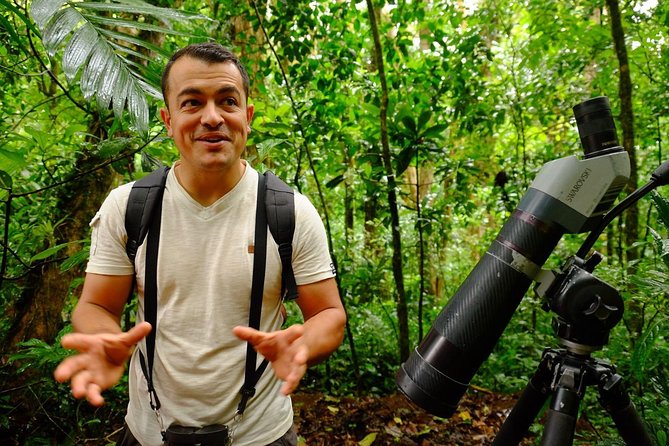
This is more than a birding trip. The guide discusses ancestral medicinal plants and the ways local people have used the forest. That adds a human layer to the outing and gives you a reason to pay attention to plants that might otherwise blend into the background.
You also hear about ecological restoration and low-impact observation. The goal is not simply to find wildlife, but to understand why the forest needs protection. The experience includes information about the conservation work that keeps this habitat intact.
Monteverde’s conservation story includes the area’s Quaker community, which played an important part in the region’s environmental efforts. The guide connects that history with the forest you are walking through today. This helps explain why Monteverde became known for conservation rather than treating the reserve as a pretty backdrop.
The ecological message is practical. Staying on trails, keeping a respectful distance, and using observation rather than disturbance all matter in a sensitive forest. If you care about responsible nature tourism, this focus is a meaningful part of the tour.
The Hummingbird Sanctuary finale
The Hummingbird Sanctuary comes at the end of the experience. After searching through the forest for movement in distant branches, you get a much closer look at these fast-flying birds around feeders.
Dozens of hummingbirds may buzz around you, giving you time to compare colors, sizes, and flight patterns. This stop is especially useful for photography because the birds are active and relatively close, although their speed still makes sharp pictures a challenge.
The sanctuary also gives the outing a satisfying change of pace. The forest walk asks for patience and concentration. The feeders create an immediate spectacle, with hummingbirds appearing and disappearing in quick bursts.
If your main goal is hummingbirds, this final stop may be the strongest part of the experience. If your main goal is a quiet walk in untouched forest, remember that a feeder area is a more managed setting. Its value is the close observation, not wilderness solitude.
The guides and the human side of the walk
George is repeatedly singled out for his warmth, clear English, humor, and ability to combine natural history with local stories. His strength appears to be the way he makes complicated subjects easy to follow, from animal behavior to the history of Monteverde’s conservation efforts.
Vinny and Roy are also named as guides. The emphasis with both is similar: bird and plant identification, help with photographs, and a friendly approach. Roy has led a walk where wildlife sightings continued despite rain and fog, a useful reminder that poor weather does not always end the experience.
The personal details matter. A Costa Rican snack made by the guide’s mother is included, and the snack has been described as a traditional local treat. It is a small item, but it gives the outing a more local feel than a standard packaged refreshment.
One account also describes George helping a family during a child’s medical emergency by allowing them to use his SUV briefly. That is not a promised part of the tour, and you should not book on the assumption that private medical transport is available. Still, it gives you a sense of the personal care that can shape a small guided experience.
Weather, footwear, and physical effort
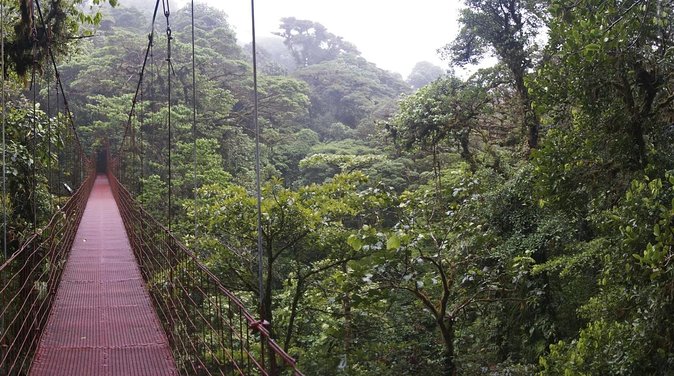
Monteverde’s cloud forest can be wet, cool, and foggy. Bring a raincoat even if the sky looks clear when you leave your hotel. Walking boots are recommended because the tour takes place on forest trails, where damp ground can make footing less certain.
The activity requires moderate physical fitness. The supplied details do not give a precise distance or elevation gain, so you should not assume that the walk is effortless. If you have concerns about hills, uneven ground, or standing for long periods, ask the provider for current trail conditions before booking.
Rain does not necessarily ruin the outing. One guide has helped people see birds in rainy, foggy conditions. Still, the activity requires good weather and can be canceled if conditions are unsuitable. In that case, you are offered another date or a full refund.
Wear clothing you do not mind getting damp. Protect your phone and camera, and keep your hands free when possible so you can use walking poles or steady yourself on the trail if needed. Those are sensible precautions for any wet forest walk.
What the $45 price really includes
The $45 price covers the guided walk, telescope use, travel or accident insurance, a local certified guide, the traditional snack, low-impact wildlife observation, and the hummingbird visit. For a 2 to 2.5-hour outing, that is a fair package if you value explanation and help with spotting wildlife.
The telescope is a particularly useful inclusion because quality viewing equipment can make the difference between hearing that a bird is nearby and actually seeing it. A guide who knows where to look also saves you time and frustration.
The price does not include the reserve entrance or private transportation. Those extras make the final cost higher than the headline figure. Group discounts are available, which may improve the value for families or larger parties, but the maximum group size is 10.
The booking pattern suggests that people often reserve about 14 days ahead. If your visit falls during a busy period, planning early is sensible, especially if you want a morning slot or a particular guide. Free cancellation is available until 24 hours before the start time. Inside that window, the payment is not refunded, and changes are not accepted.
Who should book this experience
I would recommend this walk to you if you want more than a short photo stop. It suits bird fans, families who enjoy nature, couples who prefer a guided outing, and anyone curious about Monteverde’s plants and conservation story.
It is also a good fit if you want help using a telescope or identifying animals. You do not need to arrive as an expert. The guide’s job is to show you where to look and explain what makes the forest unusual.
Families should consider the moderate physical requirement and the length of the walk. A child who enjoys animals may love the quetzal search and hummingbirds, while a child who dislikes wet trails may find the experience tiring. The child-friendly outcome depends on fitness, patience, and interest in slow wildlife watching.
I would hesitate to recommend it if you want guaranteed sightings, a completely private outing, or a flat, paved route. You should also compare the total price after adding reserve admission and transportation.
Should you book the Monteverde Wildlife Walk?
Book it if you want a small-group forest walk led by a guide who can link wildlife, plants, local history, and conservation. The combination of a telescope, flexible trail choice, possible quetzal sightings, and close hummingbird views gives the experience more substance than a simple stroll.
Before booking, confirm the reserve entrance fee, transportation arrangement, and whether your departure is fully private or part of a group capped at 10. Bring a raincoat, sturdy walking shoes, and patience.
For $45 before those extra costs, this is a strong choice for an active nature outing. It is especially appealing if George is available and you value a guide who makes the forest easier to understand, not just easier to photograph.
FAQ
How long does the Monteverde Wildlife Walk last?
The walk lasts about 2 to 2.5 hours, followed by the hummingbird encounter as part of the experience.
Where does the tour begin and end?
It begins at the entrance to the Monteverde Reserve at 8633+2PM, Carr. a Reserva de Monteverde, Provincia de Puntarenas, Monteverde, Costa Rica. It ends back at the same meeting point.
What days and times is the experience offered?
It is listed Monday through Saturday, with morning availability from 7:30 AM to 10:00 AM and afternoon availability from 1:00 PM to 4:00 PM.
Is the reserve entrance fee included?
No. Entrance to the reserve is not included in the tour price.
Is transportation included?
Private transportation is not included. The experience is near public transportation, and you should confirm any hotel transfer arrangement before booking.
What should I wear?
Bring a raincoat and walking boots. The activity takes place in a wet cloud forest and requires moderate physical fitness.
How many people can join the tour?
The activity has a maximum of 10 people. It is also described as private, so confirm the exact arrangement if you require an entirely private tour.
Is a telescope provided?
Yes. Telescope use is included for viewing birds and other wildlife in the canopy and understorey.
What happens if the tour is canceled because of weather?
If poor weather causes a cancellation, you are offered a different date or a full refund. The activity also requires a minimum number of people, and a cancellation for that reason comes with the same choice of another date, another experience, or a full refund.
Just added around Puntarenas
- Monteverde Night Walk Tour: the night life of the forest★ 5.0 · 24 reviews
- Paragliding tandem flight 1.500 ft & up★ 5.0 · 51 reviews
- Birdwatching Tour: unlock the wonder, whether beginner or advanced★ 5.0 · 51 reviews
- Package | Monteverde Cloud Forest + Curi-Cancha Reserve + Night Hike (Private)★ 5.0 · 38 reviews
- Night Walk Tour Monteverde★ 5.0 · 56 reviews
- Monteverde Tropical Forest night tour★ 4.5 · 44 reviews
- PRIVATE Guided Walk to the Monteverde Cloud Forest Preserve★ 5.0 · 49 reviews
- Monteverde Cloud Forest Horseback Riding★ 4.5 · 51 reviews
Wildlife, compared.
Skip the Line:Day Ticket-La Paz Waterfall Gardens Nature Park & Wildlife Refuge
Read our review →
Rio Celeste Waterfall Plus Sloths and wildlife Sanctuary
Read our review →
Wildlife Safari Float by Kayak in Peñas Blancas River from Arenal
Read our review →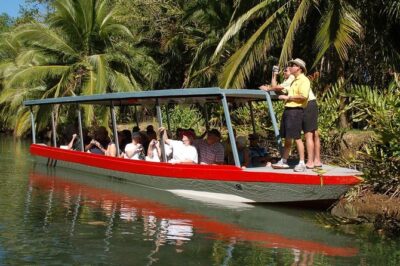
Damas Island Mangrove Boat Tour with Wildlife from Manuel Antonio
Read our review →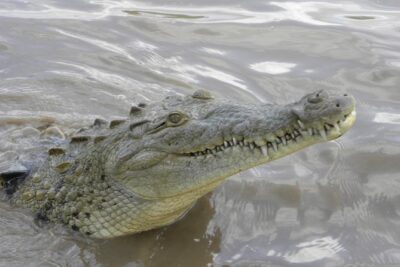
PRIVATE Palo Verde Boat Safari: Wildlife + Lunch Included
Read our review →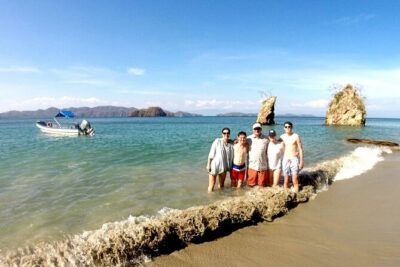
Private Nature Adventure Tour in Curu Wildlife Refuge
Read our review →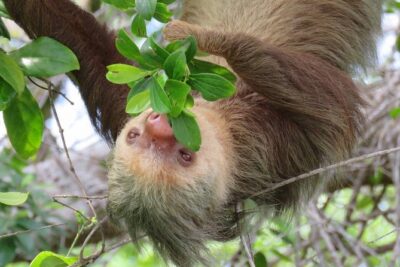
Day Trip from San Jose to Sloths & other wildlife Rescue Center
Read our review →
Peñas Blancas River: Wildlife Safari Experience by Raft
Read our review →Browse the lists this tour appears in